Introduction
For those who love challenges, Cortina offers some of the most scenic via ferratas in the Dolomites. These climbing routes are not simple hikes but scenic experiences that combine adventure, nature, and history. On this page, we offer a selection of the most significant via ferratas in the area, suitable both for experienced hikers and for those taking their first steps into the world of climbing. Are you ready for the adventure?

 We keep you company without ads. Care to buy us a spritz?
Straight to the Point
This article is quite discursive. If you want to directly get to the point of your interest, you can use the links below, or or you can use the table of contents at the bottom of the page.


We hope you'll read the full article, but if you'll decide to reach a specific section, we suggest anyway to read the chapter below. In that section, we'll provide an important disclaimer about all the content available on this page.
 Zero cookies, ads, and popups. Enjoying it? Buy us a coffee.
A Candid Confession
As a matter of principle, every topic of our website is normally based on our personal experience and repeated verification. However, this time, we faced a not-so-small difficulty: we suffer terribly from vertigo!
For this reason, the content of this page has been written with the valuable help of different sources, amongst them friends and familiar faces experienced in via ferratas, who shared their direct experience with us.

In this case, we cannot guarantee our usual level of on-site verification, but we've done deep research, and we relied on the best sources to make this page as accurate and useful as possible.
For the same reason, photographs are a little scarce, mainly archival, but selected to best represent the spirit of the climbs.
If you decide to venture onto a via ferrata, we recommend studying each route very carefully. In preparing this page, we found the website ferrate365 very helpful, as it offers a section dedicated to Cortina. If you don't feel confident, we also recommend seeking assistance from an experienced mountaineer, such as the Alpine Guides of Cortina d'Ampezzo; you can reach their website by clicking here.
 Have you seen our new Instagram page? Come follow us.
Easiest via ferratas
Let's start with the easier via ferratas to do in Cortina. But do not be misled: these are not easy hikes. You need to be an experienced and well-trained mountaineer, used to tackle demanding hikes, and with a proper equipment. In addition to climbing shoes, you'll need a helmet, carabiners, and a harness; all of it is the minimum essential, even on the simpler climbs.
An easy via ferrata is a demanding hike. These protected trails are not suitable for children, elderly people, or individuals with reduced mobility.
Now let's see a list of the less difficult via ferratas and protected paths in Cortina d'Ampezzo:
 No AI, every single text is written by us. Want to support the site?
Ra Góres de Fedèra
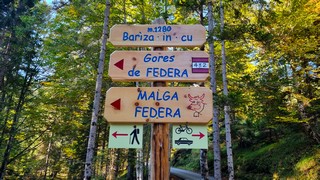
Ra Góres de Fedèra is a beautiful, simple, and recently built route with some metal steps over the Federa stream. It certainly can't be defined as a via ferrata, but it may be a great way to test a youngling or a beginner hiker.

The climb begins near Lake Pianozes and continues towards Malga Federa. The total duration is about three hours, with an elevation gain of 650 meters, or 2,100 feet, only a few of which are on metal platforms. If you'd like more information, we have described it in depth on the page below:
 We keep you company without ads. Care to buy us a spritz?
Via Ferrata Giovanni Barbara
The Via Ferrata Giovanni Barbara is a path with safety cables, suitable for beginners, included in the loop trail of the canyons and waterfalls, in Italian signed as Sentiero dei canyon e delle cascate. Along this trail you will cross the famous Ponte Outo, the high bridge, and you'll also experience the evocative passage under the waterfall of the stream Rü de Fanes.

The climb begins at the parking area of the Dolomiti d'Ampezzo Park. From there, follow the sign towards Pian de Loa. Once you reach the rest area with the bench, take the right following the sign towards the Belvedere. The path goes down with sharp bends beside the riverbed and then ascends along the Via Ferrata Giovanni Barbara. Once you reach the Ponte Outo, the high bridge, follow the signage towards the locality of Fiames to get back to the starting point.
The total duration is about four hours, with a positive elevation gain of 200 meters, or 650 feet, of which about a quarter is on a secured trail. If you want more information, we also described this climb on the page below:
Zero cookies, ads, and popups. Enjoying it? Buy us a coffee.
Via Ferrata de Ra Pegna
The Via Ferrata de Ra Pegna is a newly built secured trail, ideal for those who want to test their ability in via ferratas without having to face long or overly technical sections. The trail is located along the rocky tower of the same name, which rises to the left of the Olimpia Schuss ski slope. It can be reached in two ways.
The simplest way to get there is to take the chairlift in the locality of Socrepes up to the Rifugio Duca d'Aosta.
The second option is to walk up the road leading to Rifugio Dibona and, once at the end of the paved section, follow the signs towards Rifugio Duca d'Aosta. In this case you have to reach by car this parking area along Falzarego Pass; the walk from there should take about an hour and a half, with an elevation gain of 400 meters, or 1,300 feet.
You could also take the car to climb the first paved stretch of the road, but consider that the road is narrow and the parking lot has few spots.

From the Rifugio Duca d'Aosta, you should head towards the steep ski slope that descends between the two rocks, following the signs to the Ferrata de Ra Pegna. The climb, as mentioned, is relatively easy and goes up along the left wall for about forty-five minutes, alternating ledge sections with steep ascents. The total elevation gain is 100 meters, or 300 feet, of which half is on a secured trail.
This ferrata could also be linked with the nearby Ferrata Maria e Andrea Ferrari which is more difficult, so it will be mentioned later in the page.
Have you seen our new Instagram page? Come follow us.
Via ferrata Kaiserjäger
The via ferrata Kaiserjäger is a demanding climb that follows the path along which Austrian soldiers transported food and ammunition during the First World War. Although it does not present particular technical difficulties, don't underestimate it because of a considerable elevation gain and the presence of some exposed sections.
The equipped trail begins near the Forte Tre Sassi, a structure that also houses the Great War Museum, which we recommend visiting. The start of the trail is located in front of the museum, on the opposite side of the road.

The first part of the climb goes easy along the southern walls of Mount Lagazuoi. After about forty minutes, a sign will indicate the beginning of the protected trail, of which the suspended bridge can be seen above you. The via ferrata, rather simple and well equipped, initially crosses a small gully and then reaches the suspended bridge. After crossing it, a steeper section awaits. The final part of the ascent, which is more of a traditional hike, climbs quickly toward the Rifugio Lagazuoi.
The ascent takes about two hours, with a total elevation gain of 580 meters, or 1,900 feet, of which a little more than half are along the equipped route.
The descent can be made by cable car, if it's open, or along another evocative via ferrata that runs inside the war tunnel of Mount Lagazuoi. In this case a flashlight and shoes with excellent grip are required. For those who want to extend the route, the via ferrata can be linked with the Via Ferrata Fusetti, which we'll discuss in a later chapter.
No AI, every single text is written by us. Want to support the site?
Via Ferrata de Ra Gusela
The via ferrata de Ra Gusela is an assisted path that climbs the southeast face of Ra Gusela pinnacle. It is a rather short and easy climb, making it ideal for beginners or as the first climb of the season.

It's a loop climb that begins at the summit of Giau Pass; from there you'll take Path 443, which is always well marked. After turning right, the trail starts to have the typical steel cable and ascends, through ledges and small gullies, up to a short metal ladder. After a brief hiking section, the second part of the via ferrata begins, crossing a ridge and leading to the Rifugio Nuvolau. From here, you continue on a regular mountain trail, initially towards the Rifugio Averau and then along the easy Path 452.
This route takes about three and a half hours, with a total elevation gain of 550 meters, or 1800 feet, of which two-thirds on the protected trail.
For those who wish to extend the route, this via ferrata can be linked with the Via Ferrata Averau, which is described in the next chapter.
We keep you company without ads. Care to buy us a spritz?
Via Ferrata Averau
The via ferrata Averau is a protected trail that leads to the summit of the Torrione Averau, located near the mountain lodge of the same name. As it's a simple ferrata, it's very popular during peak season, and you may encounter delays or bottlenecks.
The Rifugio Averau is the starting point of this via ferrata; it can be reached in about an hour and a half walking from the peak of the Giau Pass, following the easy Path 452. If you prefer to use the lifts, if they are open, you can take your car to reach the chairlift departing from the Rifugio Fedare. Once you reach the mountain lodge, follow the well-marked trail heading north to reach the start of the via ferrata.

The via ferrata, after a short traverse, presents a vertical wall with few handholds; this trait is the most challenging part of the ascent. From here, you'll find a fork; it's generally tackled on the left side, along the narrow gully, and the descent is generally on the right. After this section, a second vertical wall will lead you near the summit cross, which can be reached through a short segment of unprotected mountain trail.
This route takes about two and a half hours, with a total elevation gain of 250 meters, or 820 feet, of which half is on an equipped trail.
For those who wish to extend the route, the ferrata can be linked with the loop of the Ra Gusela, which is described in the previous chapter.
Zero cookies, ads, and popups. Enjoying it? Buy us a coffee.
Via Ferrata Fusetti
The Via Ferrata Fusetti is an interesting climb with a deep historical significance. It goes along the Sass de Stria, following a path opened by a team of alpine troops searching for the remains of Second Lieutenant Mario Fusetti, a Medal of Military Valor hero of the Sass de Stria.
The via ferrata begins near the Forte Tre Sassi, which hosts the Great War Museum, which is worth a visit if you are interested in that historical period. Following the gravel road that climbs from Valparola Pass towards Falzarego Pass, you'll reach the war tunnels and then the Sass de Stria. The route should take about an hour. There is also a faster path, but we absolutely do not recommend it, as it's poorly marked and it's a badly equipped path.

The start of the via ferrata is marked by a red-painted sign. The first part of the protected trail is fairly simple, but after the first ledge you'll encounter a fairly technical wall, very steep and with few handholds. This is the most difficult stretch of the climb; once you reach the war tunnel, the via ferrata can be considered complete.
Before descending, you should also visit the summit of the Sass de Stria, where you can explore the war trenches and enjoy a splendid view. As this is a route with high verticality and is fairly new, the rocky wall is not fully stabilized; it's very important to not make rocks fall on those who may be below.
The climb takes about two hours, with a total elevation gain of 300 meters, or 980 feet, of which two-thirds are on the protected trail.
For those who wish to climb more, this via ferrata can be linked with the via ferrata Kaiserjäger, which we discussed in its chapter above.
Have you seen our new Instagram page? Come follow us.
Intermediate Via Ferratas
Let's now move on to the best intermediate difficulty via ferratas available in Cortina d'Ampezzo. These climbs are suitable exclusively for experienced and well-trained hikers, who are both used to walking in high mountains and able to tackle, without any difficulty and in total safety, any easy via ferrata.
These are routes that generally feature significant height gain, very exposed sections, and sometimes unclear handholds. Despite this, they are hard, but not extremely challenging. It's strongly recommended to be accompanied by an experienced hiker who can assist you in case of any difficulty.
Let's now take a look at the intermediate via ferratas and protected climbs in Cortina d'Ampezzo, presented in order of difficulty:
No AI, every single text is written by us. Want to support the site?
Via Ferrata M. A. Ferrari, aka Ra Bujela
The Via Ferrata Maria e Andrea Ferrari, also known as Via Ferrata de Ra Bujela, is a medium-difficulty protected trail located on the rocky tower to the right of the Olimpia Schuss ski slope. The tower is locally known by its dialect name, Ra Bujela.
The trail can be reached in two ways: the first option is to take the chairlift in the locality of Socrepes, heading towards the Rifugio Duca d'Aosta.
The second option is to get to the mountain lodge by walking. The walk starts at this parking area along the Falzarego Pass; initially you'll follow the road leading to Rifugio Dibona; once you reach the end of the paved section, follow the signs for Rifugio Duca d'Aosta. The walk should take about an hour and a half, with an elevation gain of 400 meters, or 1,300 feet.
From the Rifugio Duca d'Aosta, head toward the steep ski slope and follow the path towards Rifugio Pomedes. In just a few minutes, you'll find signs pointing to the via ferrata de ra Bujela, whose starting point is clearly marked by a brass plaque installed in 2015 by the Alpine Guides of Cortina.

The via ferrata ascends with the help of metal rungs until reaching the first bridge of the climb. From there, it continues alternating vertical sections with short ledge crossings, always aided by rungs in the more technical passages and with some rather exposed points. After crossing two suspended bridges, you'll face a fairly technical section, followed by a stretch of unprotected mountain trail. Finally, the last part of the ferrata leads to the summit. For the descent, you'll tackle a short protected wall and one final ferrata stretch; after that, you'll finally return to the Rifugio Duca d'Aosta.
The route takes about two and a half hours, with a total elevation gain of 250 meters, or 820 feet, of which 150 meters, or 490 feet, are on the equipped trail.
We keep you company without ads. Care to buy us a spritz?
Via Ferrata Degli Alpini
The via ferrata Degli Alpini is a recently built, well-equipped via ferrata that climbs the Mount Col dei Bos in the Lagazuoi Mountain Group. It's a medium-difficulty route in the areas where the alpine troops fought during the First World War. Although not excessively long, this via ferrata features steep vertical sections and very exposed passages.
The climb begins at this large parking area, near the Strobel restaurant. From there you have to walk up the steep, well-marked trail for about thirty minutes toward the start of the via ferrata.

The initial section of the climb is also the most difficult, climbing two vertical cracks and then tackling a very demanding dihedral 10 meters, or 33 feet, long, with few handholds and a steep incline. The via ferrata continues on exposed traverses, but with good holds, until reaching a second vertical wall, also with good grips, followed by more traverses and rocky ledges.
From here, the difficulty eases until the final section, where a challenging vertical wall with exposed passages awaits again. Once you reach the summit of Col dei Bos, marked by a simple wooden cross, you can descend along the trail on the left, which goes down a steep gully.
The route takes about four hours, with a total elevation gain of 500 meters, or 1,640 feet, of which two-thirds are on the protected trail.
Zero cookies, ads, and popups. Enjoying it? Buy us a coffee.
Via Ferrata Terza Cengia
The Via Ferrata Terza Cengia is an equipped trail along Mount Pomagagnon. Although well equipped and not particularly difficult, due to its length of sixteen kilometers, or ten miles, and the presence of some very exposed sections, it's considered a medium-difficulty via ferrata, which offers stunning views over Cortina.
This is a loop path that begins in the locality of Chiave, near the Codivilla Putti, and ends near the Rifugio Mietres, where you can stop for lunch or a drink.
At the starting point there's also space to park your car, but pay attention to use the free parking area, leaving the slots reserved for the hospital free. From here, take one of the many trails heading toward Mount Pomagagnon, and once you intersect the wide Path 211, continue left until you reach Path 202. From there, simply follow the signs for the via ferrata Terza Cengia.

The protected climb begins after the first steep ascent, which leads to the first section equipped with steel cable. It continues along a narrow ledge, not always equipped, where caution is required. After the second cable section and the following descent, you'll find the steepest part of the via ferrata.
Once you reach Punta Erbin, the climb continues on the opposite side until reaching Forcella Zumeles. From there, descend along the steep Path 204, which will bring you to an intersection where you could decide to head towards the Rifugio Mietres, with a half-hour detour. If you prefer not to stop to eat or drink, continue along Path 211 to return to the starting point.
This via ferrata takes about six hours, with a total elevation gain of 1,000 meters, or 3,280 feet, of which half is on the equipped trail.
Have you seen our new Instagram page? Come follow us.
Via Ferrata Renato Renè De Pol
The Via Ferrata Renè De Pol runs along the north and northwest slopes of the Forame chain, in the Cristallo Group. It's a climb of great historical interest, allowing visitors to explore areas once occupied by the Italian Army during the First World War. Although the via ferrata is not particularly technical, due to its length, it is recommended only for well-trained hikers.
This is a loop path that begins at this parking area at Passo Cimabanche. From here, descend along the wide road of the former railway, which runs parallel to the main road towards Cortina. After about two and a half kilometers, or one and a half miles, a sign will make you turn left towards the Renè De Pol via ferrata. From there, the trail climbs steeply to Pian del Forame, where another sign to the left will lead you to some military shelters and then to the start of the via ferrata.

The equipped trail is never too difficult. After passing a leftward traverse and a small gully, you'll climb a steep mountain path, equipped in the most exposed points. From there, continue until reaching a chimney, followed by several more vertical sections. The via ferrata ends at the summit, offering a splendid panorama of the surrounding Dolomites.
The descent follows a steep path toward Forcella Gialla and then along the ridge to Forcella Verde. From there, take Path 233, which descends back to Cimabanche Pass.
The route takes about six hours, with a total elevation gain of 1,000 meters, or 3,280 feet, of which one-third is equipped trail.
No AI, every single text is written by us. Want to support the site?
Via Ferrata Marino Bianchi
The Marino Bianchi via ferrata is a really scenic climb from Forcella Staunies to the middle peak of Mount Cristallo. It's a medium-difficulty ferrata, but due to the significant elevation gain, it's recommended only for well-trained hikers.
The ascent to the Rifugio Lorenzi, the starting point of the via ferrata, begins at this parking area along the Tre Croci Pass. However, due to the popularity of the hike to Lake Sorapis, this parking area is generally really crowded. For this reason, you might consider parking at this large parking lot at Rio Gere and walking up from there.
Alternatively, at Rio Gere you could take the Cristallo chairlift; if it's open, it will bring you directly to the Rifugio Son Forca, saving you 400 meters, or 1,300 feet, of elevation gain.

After reaching the Tre Croci Pass, follow Path 203 until you reach the Rifugio Son Forca. From there, climb the gully under the old cable car, gaining 700 meters, or 2,300 feet, of elevation, which will bring you to the Forcella Staunies and the Rifugio Lorenzi, which is currently closed.
The via ferrata begins on the terrace of the Rifugio Lorenzi; from there, follow the cable along the slope toward the commemorative plaque dedicated to Marino Bianchi. The route alternates between ridge sections and small gullies, leading to the first ladder. A steep ascent brings you to a second ladder that returns to the crest. Several vertical passages follow, fun and well-equipped, leading to the final ridge with a view of the summit cross.
The descent also follows an equipped trail, but along a different and well-marked route. Due to the northern exposure and altitude of the via ferrata, snow may persist even in the beginning of the hot season.
The route takes about seven hours, with a total elevation gain of 1,600 meters, or 5,250 feet, of which 200 meters, or 650 feet, are on the equipped trail.
We keep you company without ads. Care to buy us a spritz?
Difficult Via Ferratas
Let's now move on to the most difficult and demanding via ferratas in Cortina d'Ampezzo. These are highly technical routes, with strong exposure and challenging passages, suitable exclusively for expert and well-trained hikers who have already completed, without difficulty, some intermediate via ferratas.
In addition to above-average skills and physical training, tackling these via ferratas requires good route-finding skills, as signage in some sections may be suboptimal. If you're not confident, we recommend being accompanied by a mountain guide who knows the routes and can assist in the more technical passages.
Let's now take a look at the most difficult via ferratas in Cortina d'Ampezzo, presented in order of difficulty:
Zero cookies, ads, and popups. Enjoying it? Buy us a coffee.
Via Ferrata Bovero
The Via Ferrata Bovero is a climb along the southwest face of Mount Col Rosà. It's an extremely scenic itinerary, relatively short but highly exposed. Due to the steep vertical sections and the suboptimal condition of the equipment, it should not be underestimated and has been classified as a difficult via ferrata.
The approach begins at the free parking area near Camping Olympia. From there, follow the forest road 417 towards Ferrata Col Rosà for about one and a half kilometers, or one mile, until a junction on the left will lead you to the steep Path 408 towards Forcella Posporcora. Once at the mountain saddle, which is the meaning of the Italian word Forcella, continue a few meters until a right turn toward the Via Ferrata E. Bovero and Path 447.

The via ferrata begins at the brass plaque, after a steep ascent along the trail and ledges. The start is very technical, with few handholds, and continues through small terraces, unprotected paths, and sloped rock slabs that are easy to climb. From there, a second vertical section, exposed and with few grips, leads to an overhang and then to the final part of the first section, which is also quite technical.
From here, the route continues along an exposed trail to the final ascent, with metal rungs along a dihedral and gully, until reaching the summit of Mount Col Rosà, where you'll find a summit cross and a spectacular view of the Dolomites. The descent follows the steep Path 447, which leads back to the forest road 417 and then to the parking area.
The route takes about five hours, with a total elevation gain of 900 meters, or 2,950 feet, of which 200 meters, or 650 feet, are on the equipped trail.
Have you seen our new Instagram page? Come follow us.
Via Ferrata Albino Michielli Strobel
The Via Ferrata Albino Michielli Strobel is a very scenic route that climbs the western side of Mount Punta Fiames. Although there are some exposed sections, the route is well equipped. While the climb itself isn't extremely technical, the elevation gain of over 1,000 meters, or 3,280 feet, and the descent along the steep scree slope make it difficult.
The via ferrata starts at the Hotel Fiames, where you'll find plenty of free parking nearby. After crossing the road, follow the well-marked Path 218, which first enters the forest and then climbs a steep gully leading to the start of the via ferrata.

The ascent begins with a very vertical section, followed by a wide panoramic terrace and a stretch through rocks and dwarf pines. From there, the climb continues vertically on smooth rock, aided by metal rungs. Next comes an exposed traverse to the left, a ledge, a rocky step, and a long metal ladder. After the ladder, there's an airy and challenging section on an equipped wall, leading to a small scenic balcony.
The final part includes a traverse with good footholds, a passage under a rock overhang, and a vertical exposed climb with solid holds. Then come easy rock steps, small ledges, and traverses, followed by the last ridge and finally the summit plateau. From here, a marked trail leads to the top of Punta Fiames, offering spectacular views of Cortina, Mount Cristallo, and Mount Tofane.
The descent follows Path 202, which drops down the steep scree slope of Mount Pomagagnon, crossing the Terza Cengia via ferrata mentioned earlier. Walk after the junction until you reach Path 218, and finally turn right towards the locality of Fiames to return to the starting point.
The full route takes about five hours, with a total elevation gain of 1,000 meters, or 3,280 feet, of which a little less than two-thirds are on equipped trail.
No AI, every single text is written by us. Want to support the site?
Via Ferrata Ivano Dibona
The Ivano Dibona via ferrata is an exceptionally scenic climb in the heart of the Cristallo Group. The real challenge of this route isn't the technical aspects of the ferrata but the demanding elevation gain of over 1,300 meters, or 4,300 feet, spread across more than twenty kilometers, or twelve and a half miles.
This itinerary is suitable only for well-trained hikers who will need to rely more on endurance than on climbing skills, although climbing sections are present.
The starting point of the Ivano Dibona via ferrata is near the Rifugio Lorenzi, which can be reached from the Rifugio Son Forca by climbing a steep gully that was once served by a cable car. There are two ways to reach Son Forca.
The first is a strenuous hike from this parking area in the Tre Croci Pass along Path 203. Due to the popularity of the hike towards the Sorapis Lake, this parking lot is often crowded, so you might consider parking at the larger parking lot in the locality of Rio Gere.
The second option, when open, is to take the Cristallo chairlift from Rio Gere, which brings you directly to the Rifugio Son Forca, saving you about 400 meters, or 1,300 feet, of elevation gain.

From the Rifugio Son Forca, continue on foot up the gully where the old cable car used to be, climbing the 700 meters, or 2,300 feet, of elevation that separate you from Forcella Staunies and the Rifugio Lorenzi, which is currently closed. This is a fairly demanding ascent on slippery terrain and will take about two hours.
Once at the top of the saddle, climb the iron staircase behind the mountain lodge, where you'll find a commemorative plaque for Ivano Dibona and the start of the via ferrata's equipped section, featuring the iconic suspension bridge.
After this first part, the route continues along the ridge, with an optional detour to Cima Cristallino, a peak, then passes under the Cresta Bianca, where you'll see remnants of military posts and an old soldier's shelter.
After crossing a partially equipped ledge, you'll reach the distinctive Buffa di Perrero bivouac, then continue along the southern side of Vecio del Forame until you reach Forcella Alta. From here, there's a steep, unmarked trail leading to Path 203, but it's difficult and not recommended.
Instead, we suggest continuing to Forcella Bassa, climbing down the final ladder, and descending the scree slope until you reach the first trees and the last section of the route, marked by steep switchbacks.
Once you reach Path 203, you have two options. The quickest is to descend towards the Ristorante Rifugio Ospitale, where you'll need to take a bus, which is not ideal as they are few, or retrieve a second car if you planned it and you've parked it earlier.
The second option is to walk back up through Val Padeon along Path 203 and then Path 206 to return to the parking lot of Rio Gere, completing this demanding loop.
The full route takes about ten hours, with a total elevation gain of 1,300 meters, or 4,265 feet, including 250 meters, or 820 feet, on equipped trail.
We keep you company without ads. Care to buy us a spritz?
Via Ferrata Lipella
The Via Ferrata Lipella runs along the northwest face of Mount Tofana de Rozes. It's a very scenic route and not overly technical, but the length of the itinerary combined with the significant elevation gain makes it a challenging via ferrata.
The route passes through areas where World War I has been fought, and there's an optional detour to the Castelletto Tunnel, which is highly recommended, although a headlamp is required.
The starting point is the Rifugio Angelo Dibona, which can be reached by car via a narrow mountain road, partly unpaved, ending in a large parking area. To avoid crowds during peak season, it's best to get there early in the morning. From the mountain lodge, follow Path 403, then take Path 404, which are both well marked.

Once you reach the entrance of the Castelletto Tunnel, you can choose to take this detour or skip it. This tunnel goes up in the same direction you would also climb. The tunnel ascends through a wartime mine shaft, part of the famous battle episode known as Il Castelletto. It's a mid-level equipped trail into the tunnel dug by Italian soldiers to place explosives beneath Austrian positions during the Great War. Remember to bring a headlamp to light your way.
If you prefer to avoid the tunnel, continue along Path 404 until you reach the junction on the right that leads to the Via Ferrata Lipella, which begins where the tunnel ends.
The via ferrata starts with easy rock steps, a vertical wall, and a dihedral. It continues with an exposed traverse, a short trail, and another more demanding traverse, followed by a long unprotected ledge. After crossing a few gullies, you'll climb a jagged wall and a chimney, then another exposed ledge. The route then ascends a stepped wall to the Tre Dita cross, where you can head toward Rifugio Giussani or Rifugio Cantore.
If you continue towards the summit, you'll face vertical steps, a horizontal traverse, some scrambling sections, and a tough stretch with few handholds. The final part includes smooth rock and two difficult passages before joining the normal route to the summit cross of the Tofana de Rozes.
The descent follows the last section of the normal route, marked by blue spray dots on the rock, leading to the junction for the Rifugio Giussani. From there, take Path 403 back to the Rifugio Dibona. There's also the option to stop at the Tre Dita, which shortens the route by about three hours.
The full route takes around eight hours, with a total elevation gain of 1,200 meters, or 4,000 feet, of which half are on equipped trail.
Zero cookies, ads, and popups. Enjoying it? Buy us a coffee.
Via Ferrata Giuseppe Olivieri
The Olivieri Via Ferrata climbs to the summit of Mount Tofane, reaching Punta Anna, which can be translated as "Anna's Peak," through a demanding and exposed alpine route, suitable only for experienced hikers.
The starting point for the ascent to Punta Anna is the Rifugio Angelo Dibona, which can be reached by car via a narrow mountain road, partly unpaved, ending in a large parking area. Once at the Rifugio Dibona, follow Path 421 for about forty minutes to reach Rifugio Pomedes. During the peak season, to avoid finding a full parking lot, it's better to get there very early in the morning.
Alternatively, you can reach the Rifugio Pomedes using the Piè Tofana lifts and then the chairlift connecting the Rifugio Duca d'Aosta to the locality of Pomedes. This way, you'll save about 250 meters, or 820 feet, of elevation gain and an hour and a half from the estimated timing.

From the Rifugio Pomedes, follow the signs toward the sentiero attrezzato Olivieri, which means "equipped trail Olivieri." This steep path leads to the saddle where the start of the via ferrata is located.
The first section, very technical and vertical, climbs a solid wall without rungs, as will be the case for most of the ascent. After the first wall, there is a slight descent followed by a comfortable ledge leading to a vertical step and then to a panoramic terrace overlooking the mountain Tofana de Rozes.
From here, a climb on easy rocks will make you cross the saddle, with some amazing views of Mount Tofana di Mezzo. Next, a very exposed ridge leads to a steep ascent with possible stops on narrow spots, then a four-meter, or thirteen feet, overhanging wall is crossed with the help of a cable. From there, climb in zigzags along a vertical wall and a small gully to an exposed trail leading to the junction for the Rifugio Giussani. Avoiding the detour, continue right toward Dos de Tofana, where a final vertical climb and a ledge complete the ascent.
For the return there are different options, but the most convenient is to go back to the crossing for the Rifugio Giussani and descend along the equipped trail until reaching the intersection with Path 403, from which you can quickly ascend to the Rifugio Giussani or return directly to the Rifugio Dibona.
Alternatively, you can combine the ascent with the Aglio via ferrata, which we'll describe in the next chapter, and reach the mount Tofana di Mezzo.
As a final option, you can walk back the Olivieri equipped trail, the same road as the ascent, which will take you back to the Rifugio Pomedes.
The duration of the full route is approximately four and a half hours, with a total elevation gain of 1,500 meters, or 4,900 feet, of which one-third is on the equipped trail.
Have you seen our new Instagram page? Come follow us.
Via Ferrata Gianni Aglio
The Gianni Aglio via ferrata is a beautiful climb that winds along the ridge between Dos de Tofana and the summit of Tofana di Mezzo. Highly exposed, badly equipped, and quite demanding, it is one of the most scenic routes in the Dolomites. There are several variants of this via ferrata, such as those that make the approach easier by using the Ra Valles cable car or the chairlift to the Rifugio Pomedes.
In our case, we'll describe the most challenging version, which starts from the Rifugio Angelo Dibona. The mountain lodge can be reached by car via a narrow mountain road, partly unpaved, ending in a large parking area. During peak periods, it is advisable to start early in the morning to avoid a full parking lot.

Once at Rifugio Dibona, the classic option is to follow Path 421 for about forty minutes to reach Rifugio Pomedes and link the ascent with the nearby Olivieri via ferrata, which we discussed in the previous chapter. This makes the experience much more rewarding, but if you're not well-trained, you risk arriving already tired at the start of the Aglio via ferrata. Alternatively, from the locality of Pomedes, you can follow the Olivieri Equipped Trail, making the ascent less difficult, though extending the route by about forty-five minutes.
If you're looking for a less demanding variant, we recommend starting from the Rifugio Angelo Dibona and following Path 403 towards Rifugio Giussani, then taking the mid-slope path toward Punta Anna and joining the final section of the Olivieri via ferrata, reaching the reference point known as Dos de Tofana, which means "the back of Mount Tofana" in the local dialect.

From the Dos de Tofana, the ferrata begins immediately with a vertical ladder of about ten meters, followed by a section along an exposed ridge. The route alternates between north and south faces with equipped passages and short rocky steps until the saddle below the Torre Aglio, meaning Aglio Tower. Here begins the most challenging section, climbing vertically on the east face of the tower, then tackling the famous traverse of the Cengia Aglio, meaning the "Aglio rock ledge," a very exposed and narrow section.
After this point, you reach a debris-covered terrace, and then you'll cross the Bus de Tofana, a large natural opening in the rock offering a breathtaking view. From here, descend briefly to the base of the southeast ridge of the Tofana di Mezzo, then climb again over scree slopes and equipped sections with ladders and avalanche barriers. The final stretch is the easiest, on a trail and small rocks, up to the summit cross.
For the return, the route would involve descending to the Rifugio Giussani along the first section of the Ferrata del Formenton, then turning left onto the marked but unnumbered trail that descends along the ridge toward the Forcella del Vallon. This is a steep and exposed trail, which once completed allows for an easy return to the Rifugio Dibona via Path 403.
If you're tired, the descent can be eased by the Freccia nel Cielo cable car, which takes you down from the top of Mount Tofana to the intermediate station at Ra Valles, from where you can return to the Rifugio Dibona via the Astaldi Equipped Trail.
The duration of the full route is approximately eight and a half hours, with a total elevation gain of 800 meters, or 2,620 feet, of which a little less than half is on the equipped trail.
No AI, every single text is written by us. Want to support the site?
Via Ferrata Tomaselli
The Tomaselli via ferrata is a route that winds along the Fanis Sud Peak, in the Fanes group. Demanding, exposed, and at times very technical, it requires excellent physical preparation. It's considered one of the most difficult and fascinating via ferratas in the Dolomites, especially for the magnificent panorama visible from the summit.
The starting point of the via ferrata is near the Rifugio Lagazuoi, which can be easily reached via the Funivia Lagazuoi, a cable car, or alternatively, along the equipped trail Kaiserjäger, which we described in a previous chapter.

Once at the mountain lodge, take Path 20 northward, following the clear signs for the via ferrata. Once you reach the commemorative plaque, the via ferrata begins on smooth walls and exposed traverses that require strength and determination. After the initial vertical and scenic sections, you'll tackle some narrow ledges and a long equipped dihedral until reaching the summit of Cima Fanes Sud, where you can enjoy a spectacular view.
The descent, also equipped, heads north along several vertical drops and a chimney, ending in a gully that will lead you back to the trail toward the Rifugio Lagazuoi and the cable car departure point.
The duration of the full route is approximately five and a half hours, with a total elevation gain of 500 meters, or 1,640 feet, of which half is on the equipped trail.
We keep you company without ads. Care to buy us a spritz?
Via Ferrata Sci Club 18
The Sci Club 18 via ferrata is a new route built on Mount Faloria. Characterized by steep vertical sections and stunning views, it's generally considered the most difficult via ferrata in Cortina d'Ampezzo. It's a steep climb on an equipped trail, very sporty, demanding, and suitable only for highly experienced hikers.
The starting point of the ferrata is in the locality of Mandres, which can be reached via the first section of the Faloria cable car or by hiking up from Sompiei, where there's a tiny public parking lot, marked on the map that you can see by clicking its name.

From the Mandres middle station of the cable car, follow Path 206 and the clear signs until you reach the metal plaque marking the start of the equipped section. The Sci Club 18 via ferrata begins with a demanding vertical section, followed by smooth walls, rocky overhangs, and exposed traverses. It alternates between rungs and natural holds, with athletic moves on polished slabs and unstable gullies.
After a climbable chimney and a wide crack, you tackle the final ridge with a dihedral and strong exposure. The route ends on a panoramic crest, after ramps and equipped traverses, with views of the cable car arrival station and the Rifugio Faloria.
The descent can be made along Path 212, which descends from the summit of Mount Faloria along a path that is initially steep but not technical, down to the intermediate station at Mandres. Alternatively, you can also descend by cable car.
The duration of the full route is approximately three hours, with a total elevation gain of 650 meters, or 2,130 feet, of which half is on the equipped trail.
Zero cookies, ads, and popups. Enjoying it? Buy us a coffee.
Equipment and advice
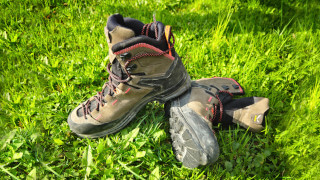
To safely tackle a via ferrata, you should always have the right equipment. The most important item is a certified via ferrata kit with carabiners, a harness, and a helmet. Secondly, make sure to wear proper footwear with reinforced, non-slip soles. On more demanding routes, it's a good idea to protect your hands with climbing gloves. If you're missing anything, you can rent gear at one of the many shops in the area.

As for clothing, we recommend dressing in layers, since conditions on the wall can range from strong wind to intense sun. Always carry a light backpack to store extra clothing and keep a windproof and waterproof jacket handy. Don't forget sunscreen, sunglasses, water, a couple of energy bars, and a headlamp for any tunnel sections.
One last tip: always check the weather before heading out, and avoid via ferratas if conditions are even remotely uncertain. Even though choosing to do a ferrata usually means you're an experienced hiker, it might still be helpful to read the page we wrote on hiking safely in the mountains:
 Have you seen our new Instagram page? Come follow us.
Climbing Gym
If you want to train for climbing or the weather isn't ideal, Cortina offers the Indoor Climbing Wall Lino Lacedelli, a facility with 24 meters, or 79 feet, of height with over 80 routes ranging in difficulty from 3B to 8B+ in the French scale, or approx. 5.6 to 5.14a YDS.

The facility features a lead climbing area with long, challenging routes, as well as a section with shorter climbs suitable for less experienced climbers. Beginners can practice on the small, dedicated bouldering wall. Routes are updated three to four times a year to keep things fresh and challenging.

In addition to the climbing area, the Lino Lacedelli Climbing Gym also includes a bar where you can relax and enjoy a drink after your workout.
No AI, every single text is written by us. Want to support the site?
Conclusion
We hope you liked this page on best via ferrata and equipped trails in Cortina. Before saying goodbye, we would suggest you read our home page, with all the articles we wrote about Cortina d'Ampezzo.
If you want to thank us, you can read the page Support Us. If you only want to suggest a change, propose something, or just say hello, in the section Contacts and Info, you'll find all the ways to reach us.